SEARCH · COMPARE · BOOK

Car Rental Bonn Downtown, Bonn

Compare car rental offers. Review vehicle options, pickup details and supplier conditions before booking.
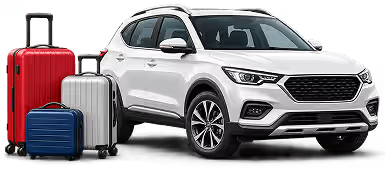
White rental car with travel luggage

Find the Best Car Rental Deals

Driver's country of residence is and age is

Car rental suppliers – Bonn Downtown

Compare supplier ratings. Select a logo to view branch details.

10 suppliers

Flexible cancellation options

Explore free cancellation on eligible deals. Conditions may vary.

Compare car rental prices

Compare prices and rental conditions from multiple suppliers.

Review before you book

Review vehicle options, pickup details and rental terms before booking.

Car rental deals

Loading live car rental offers…

How Much Does It Cost to Rent a Car in Bonn Downtown?

Compare average car rental prices by month and see how rental rates vary throughout the year in Bonn Downtown.

↘
Cheapest Month AverageJan$40Average daily price
↗
Most Expensive MonthSep$85Average daily price
▦
Yearly Average PriceYearly average$58Average daily price

Monthly Average Car Rental Prices

USD · Average per day
Jan $40 Lowest
Feb $42
Mar $47
Apr $53
May $62
Jun $73
Jul $80
Aug $82
Sep $85 Highest
Oct $70
Nov $56
Dec $48

Bonn Downtown - Former capital with UN business travel. Beethoven festival (September) increases demand. Cherry blossom season (April) attracts visitors. Book 2 months ahead.

* Prices shown are approximate. Original prices are in USD and converted using real-time exchange rates.

DRIVING INFORMATION

Driving in Bonn Downtown: Laws & Information

Essential driving rules and requirements to know when renting a car.

Driving Side
Right
Side of the road
Minimum Age
18
Minimum age to drive
Blood Alcohol Limit
0.05%
Maximum allowed
IDP Required?
Sometimes
International Driving Permit
Speed Units
km/h
Speed measurement
Seat Belt
Required
Seat belt rules
Toll Roads
No
Toll road availability
Emergency
112
Emergency services number

View the Complete Driving Guide for Germany

Get detailed information on driving rules, licence requirements, speed limits and useful local tips.

View Full Driving Laws Guide
EXPLORE LOCATIONS

Car Rental Locations in Bonn Downtown

Markers show approximate airport or town-centre areas, not confirmed rental desks.

Have Questions?

Frequently Asked Questions about Car Rental at Bonn Downtown

Yes, Bonn city center is a designated Low Emission Zone. All vehicles entering the downtown area must display a valid green environmental sticker on the windshield. This applies to both domestic and foreign-registered vehicles. Rental cars in Germany are almost always equipped with the correct green sticker already affixed. However, you should verify with your rental agent at pickup that the vehicle is compliant. Driving without a valid sticker in the zone can result in a fine of approximately $110, plus administrative fees. The zone covers most of the central city, but the main transit autobahns are exempt.

The minimum age to rent a vehicle in Bonn is typically 18 years old for most standard car categories, though this varies slightly by rental provider. However, if you are under 25 years of age, you will almost certainly be subject to a Young Driver Surcharge. This fee generally ranges from $22 to $33 per day, with a maximum cap often applied per rental period. Additionally, drivers under 25 may be restricted from renting premium vehicles, large SUVs, luxury models, or specialty vans due to insurance liability policies. Always check the specific age policy for your chosen car class before booking.

The security deposit amount depends on the vehicle category and the type of card you use. For standard economy or compact cars, you should expect a hold of approximately $280 to $350 on your credit card. For premium vehicles, large SUVs, or luxury electric cars, the deposit can be significantly higher, ranging from $850 up to $2,200. If you are using a debit card, the rental station may require a larger deposit upfront and will perform a credit check. The full deposit is blocked on your account, not physically charged, and is released upon successful return of the vehicle.

Yes, many rental locations in Bonn accept major debit cards like Maestro, VPAY, Visa Debit, or Mastercard Debit. However, there are strict conditions. Prepaid cards, electronic cash cards, and virtual cards are universally not accepted. The debit card must be embossed with your name and linked to a traditional bank account. When using a debit card, the rental station will usually perform a credit check and block a larger security deposit than they would for a credit card. The funds are deducted from your available balance immediately, so ensure your account has sufficient funds to avoid rejection.

Renting from a downtown Bonn location is often significantly cheaper for the base rate compared to picking up directly at Cologne Bonn Airport. This is because airport locations include substantial surcharges and fees, such as a premium location service charge which can add roughly 20-25% to the total cost. While the airport offers 24/7 service and immediate highway access, the savings from a city-center branch can be worth the short taxi or train ride. For long-term rentals of a week or more, the difference can amount to over $100 in total savings by avoiding the airport concession fees.

The most common and transparent fuel policy in Bonn is Full-to-Full. You will receive the car with a full tank of fuel and you are expected to return it with a full tank. If you return the car with less fuel, you will be charged a premium refueling rate per liter, which is considerably higher than local gas station prices, plus a service fee. Some companies may offer a Prepaid Fuel option where you pay for a full tank upfront at a rate slightly below street price, but you will receive no refund for unused fuel. Full-to-Full is the best value if you plan to drive a lot.

You must present a valid, unexpired driving license held for at least one year. If your license is not in the Latin alphabet, an International Driving Permit is required alongside your home license. You also need a valid passport or national ID card for identity verification. Finally, a credit or debit card in the primary driver's name is mandatory for the security deposit. Note that digital driver's licenses on mobile phones are not accepted in Germany; you must have the physical plastic card. All documents must be original; photocopies are not sufficient for the rental contract.

Adding an additional driver to your rental agreement costs approximately $11 to $14 per day at downtown locations. If you are renting from a station with a railway or airport prefix, the fee is slightly higher at around $14 to $17 per day. There is usually a maximum cap, so you won't pay this fee for more than 10 days even on a monthly rental. The additional driver must be present at pickup to show their own driver's license and identification. They share the same insurance liability and age restrictions as the primary renter.

Cross-border travel is generally permitted to most neighboring and nearby EU countries including France, Belgium, Netherlands, Luxembourg, Austria, Switzerland, and Denmark, as well as Italy and the UK. However, you must declare your intention to cross the border at the rental counter to receive written authorization and the required on-board equipment. There is a cross-border fee of approximately $5.50 to $7.00 per day. Travel to Eastern European countries like Poland, Czech Republic, or Hungary is often restricted to specific car brands; premium German vehicles are usually excluded from these journeys.

By law, all rentals in Germany include mandatory Third-Party Liability Insurance with a very high coverage limit, which protects you against claims for damage to other people or property. This does not cover damage to the rental car itself. Most bookings include a standard Collision Damage Waiver with a deductible of $900 to $1,900 depending on the car class. This means if you damage the car, you are liable for up to that deductible amount. You can purchase additional products at the counter to reduce this excess to zero, either through the rental company or a third-party provider.

Parking in Bonn city center is regulated by a zone system with paid parking tickets required on most streets via the 'Parkschein' machines. We recommend using secure public parking garages for longer stays, such as Marktgarage, Friedensplatz Garage, or Munsterplatz Garage. These offer covered, safe parking with average rates around $2.20 to $3.30 per hour. Be extremely careful to read street signs in residential areas; 'Anwohner parken frei' means only local residents with a specific permit can park there. Illegally parking can result in a fine and, if the rental company receives the ticket, an additional administrative handling fee.

Yes, Germany has a 'situational' winter tire requirement. If you are driving in black ice, packed snow, slush, or icy conditions, the vehicle must be fitted with tires bearing the Alpine symbol or M+S marking. While not mandatory on a dry, clear winter day, rental companies in the Bonn region will equip their fleet with all-season or winter tires from approximately October through April as a safety standard. You do not need to specifically request them, but if you plan to drive into the Eifel region or south toward the Alps, you should confirm that winter-rated tires are mounted to avoid fines and insurance issues.

First, ensure your safety and set up a warning triangle and reflective vest. For a breakdown, locate the roadside assistance number specific to your rental agreement. For an accident, you must contact the police immediately to file a report. Do not admit fault at the scene. You are then required to notify the rental branch as soon as possible, even for minor scratches. Failure to file a police report for any damage involving another vehicle or public property can invalidate your insurance coverage. Keep the police report number; the rental company will need it to process the claim.

Within Bonn city limits, the general speed limit is 50 km/h unless otherwise posted. However, in many residential streets and areas near the city center, you will encounter 30 km/h zones. These are strictly enforced with speed cameras. On the autobahn surrounding Bonn, there is a recommended speed of 130 km/h, but many sections are subject to variable electronic speed limits. Be aware that unlike some parts of the Autobahn, the area around the Bonner Kreuz interchange has a fixed limit of 100 or 120 km/h. Fines are high and rental companies will pass on administrative fees for processing tickets.

Yes, German law is very strict regarding child safety. Children under 12 years of age or under 150 cm in height must use an approved child restraint system appropriate for their weight. You can rent infant seats, toddler seats, or booster seats from the rental counter for approximately $11 to $15 per day. Due to limited availability, these must be reserved in advance; you cannot simply show up and expect one to be available. If you bring your own seat, ensure it has the ECE R44/04 or R129 i-Size approval label for use within the EU.

Most car rental bookings in Bonn offer free cancellation up to 24 or 48 hours before the scheduled pickup time, provided you book a 'Pay Later' rate. If you have prepaid for a discounted, non-refundable rate, cancellation will usually result in forfeiture of the prepaid amount or a significant fee. During major trade fair periods in nearby Cologne, policies can be stricter. You can typically modify or cancel your booking easily online or via the rental company's app. Always review the specific 'Cancellation Policy' link in your confirmation email, as it supersedes general advice.

No, passenger cars do not pay tolls on German autobahns or federal roads. Driving from Bonn to other major German cities like Frankfurt or Dusseldorf is toll-free. However, if you plan a day trip to Belgium, France, or Austria, those countries have extensive toll systems and require a vignette sticker in Austria. While Germany itself is free for cars, be aware that trucks do pay tolls, and you might see signs for 'LKW-Maut' systems. You can ignore these as a private car renter. The only potential cost is for specific tunnels or eco-zones in other countries.

Yes, one-way rentals are a common service offered by major providers in Bonn. This flexibility comes with a one-way drop fee. The cost varies significantly based on the distance, vehicle category, and current fleet availability. For a drop-off at a major hub like Frankfurt Airport from Bonn, you can expect a surcharge of approximately $55 to $120. You must specify the different drop-off location during the booking process to see the exact fee. Returning a car to a different city without prior authorization can result in a much higher penalty fee.

Most rental companies in Bonn allow pets in the vehicle, but with strict conditions. You must declare you are traveling with a pet at the time of booking or at the counter. Pets must be transported in a suitable, secure carrier or crate for the duration of the journey. You are expected to return the vehicle in clean condition, free of pet hair and odor. If the interior requires specialist cleaning or deodorizing upon return, you will be charged a detailing fee, which can range from $150 to $300. Service animals are exempt from these restrictions but should still be noted.

Rental companies typically offer a short grace period of 29 minutes. If you return the car 30 minutes or more past your contracted time, you will be charged for an additional day of rental at the local going rate, plus any applicable surcharges and taxes. If you know in advance that you need the car for a few more hours, it is always more economical to call the rental branch and request an extension. They can often extend the contract at your original rate, whereas a late return incurs a 'post-contract' rate that is significantly higher and includes penalties.

To secure the best rate, book as far in advance as possible. Prices in Bonn fluctuate based on local events, especially conventions in Cologne. Compare rates across booking platforms but check the rental company's own website for exclusive loyalty discounts. Choosing a pickup location outside the main train station or airport zones saves approximately 20% on location service fees. Consider renting a manual transmission vehicle, as automatics are considered a premium upgrade in Germany and can add $15-$25 per day to the cost. Finally, avoid renting at the counter without a reservation, as walk-up rates are the highest.

You are not required to professionally detail or wash the exterior of the car before returning it. Rental companies expect normal road dirt and will wash the vehicle as part of their standard turnaround service. However, you must ensure the interior is free of excessive trash, sand, mud, or spills. If the car is returned with stained seats, a foul odor, or excessive pet hair that requires special cleaning equipment, you will be billed a significant valeting fee. A quick vacuum and removal of personal belongings is all that is expected for a standard return.

Yes, you can request a vehicle equipped with a built-in GPS navigation system. This is often an optional extra costing between $10 and $18 per day. We recommend this option for tourists unfamiliar with the Rhine-Ruhr area, as it will include real-time traffic updates for the notoriously busy Cologne Ring. A cost-saving alternative is to use your own smartphone with Google Maps or Waze. Most modern rental cars feature Apple CarPlay or Android Auto, allowing you to project your phone's navigation directly onto the car's infotainment screen for free.

We strongly recommend a compact or economy class vehicle for navigating Bonn's city center and Altstadt. Streets in the old town are narrow, and parking spaces in public garages are designed for smaller European cars. A Volkswagen Polo, Opel Corsa, or similar hatchback will be much easier to park and maneuver than a mid-size sedan or SUV. While a larger vehicle is comfortable for autobahn cruising, it becomes a liability in the city's tight multi-story car parks. Choose a car that prioritizes visibility and a tight turning radius over engine size.

If you have a reservation that includes after-hours return, the branch will provide specific instructions via email or on a sign at the office door. Usually, you will park the car in a designated parking area associated with the branch. You are then required to lock the vehicle and deposit the keys in a secure drop box. It is crucial to note that you remain fully responsible for the vehicle's condition until the office reopens and a staff member performs the check-in inspection. Take clear, time-stamped photos of the car's exterior and fuel gauge as proof of condition upon drop-off.

Long-term rentals of 30 days or more offer substantial savings compared to daily or weekly rates. Depending on the season and vehicle category, a compact economy car can be rented for as low as $550 to $750 per month inclusive of taxes and basic insurance. Mid-size sedans and station wagons range from $800 to $1,200. These monthly rates often include higher mileage allowances or unlimited kilometers. Corporate and student discounts are available. Be aware that you usually need to return the car for a quick maintenance check every 30 days on these extended contracts.

Rental companies operate on a 'vehicle group' system, not a specific model guarantee. When you book a category such as 'Luxury' or 'Premium', you are guaranteed a vehicle of that size and standard, but not a specific brand. While you may reserve a group that includes the BMW 3 Series or Mercedes C-Class, you could receive an equivalent vehicle like an Audi A4. To maximize your chances of getting a specific German brand, book through the rental company's own 'Premium Selection' or 'Dream Car' service, which offers a more precise but slightly more expensive booking guarantee.

If you receive a parking ticket and pay it immediately at the local municipal office, the rental company may never know. However, if you leave the ticket unpaid or it is issued via camera, the authorities will trace the plate to the rental company. The rental company will then pay the fine on your behalf and charge the amount to your credit card on file. In addition to the cost of the fine, they will add an administrative processing fee of approximately $25 to $45 per incident. It is always cheaper to pay the 'Knollchen' yourself before you return the car.

Yes, the 'Right before Left' rule applies on unmarked intersections in residential areas; the vehicle coming from the right has priority unless signs indicate otherwise. Do not pass on the right on the autobahn; it is illegal and dangerous. You are required by law to carry a reflective safety vest and a warning triangle in the car. Using your horn is restricted to emergency situations only. Finally, be aware of bicycle lanes; turning right requires you to check the bike lane mirror and yield to cyclists who have the right of way going straight.